01 — The Basics
What Is a Countertop Edge Profile?
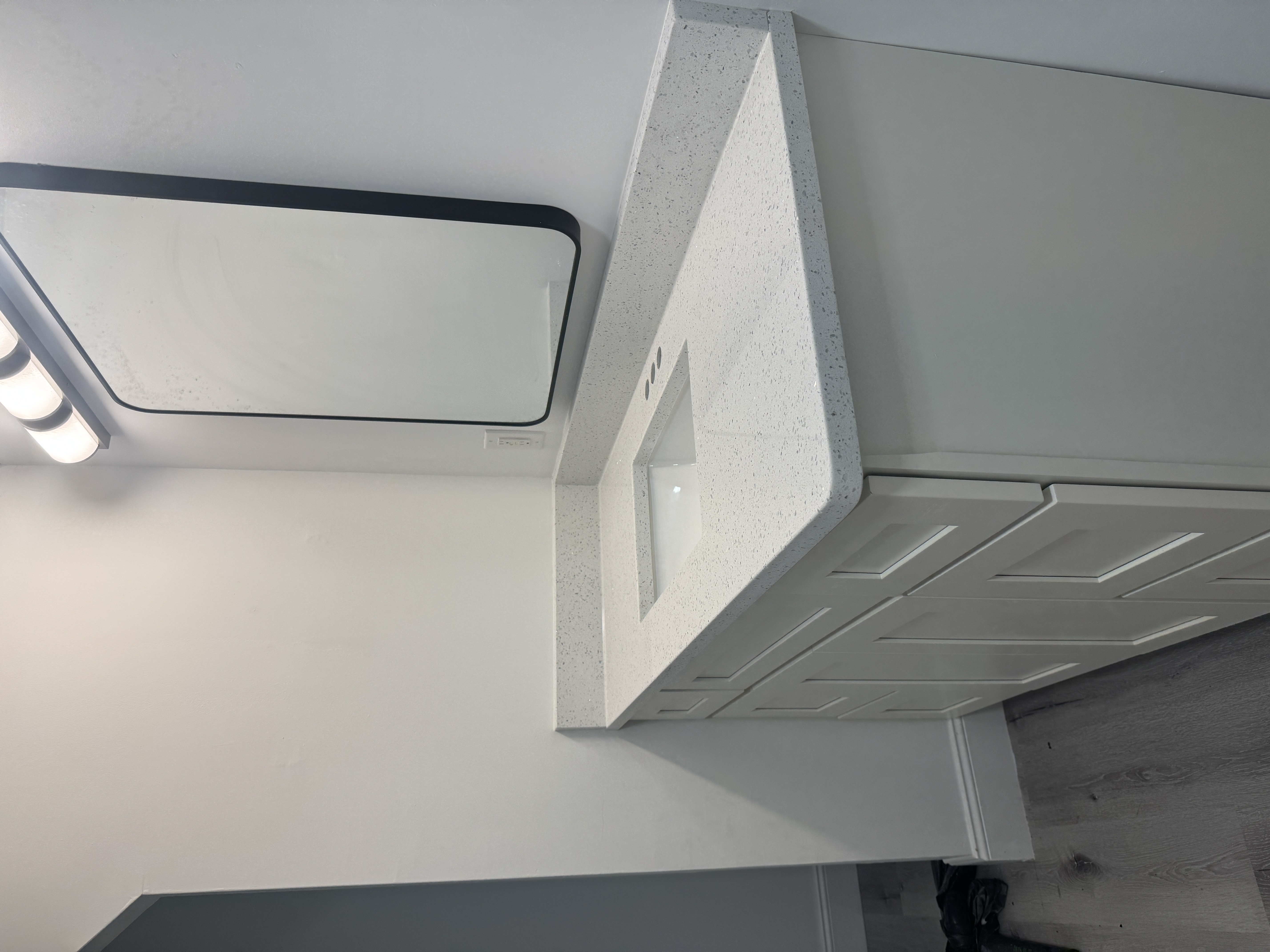
A countertop edge profile is the shape created along the exposed finished edge of the countertop.
The countertop material may be the same, but changing the edge can make that surface feel more modern, traditional, substantial, decorative or understated.
Edge selection can also affect fabrication requirements, cleaning characteristics and the way the countertop feels when you stand or sit beside it.
Edge Names Can Vary
Fabricators and manufacturers do not always use identical names for every edge variation. When selecting an edge, reviewing an actual profile sample or drawing is more reliable than choosing by name alone.
02 — Popular Styles
Common Countertop Edge Profiles
These are several of the edge styles homeowners commonly encounter when planning stone or engineered countertop projects.
The simplified illustrations below are intended to communicate the general style. The exact shape available for your project can vary by fabricator, material and fabrication method.
Eased Edge
An eased edge maintains a mostly straight profile while slightly softening the sharp corners of the slab.
Its understated appearance works well when you want the countertop material itself to remain the primary visual feature.
Beveled Edge
A beveled edge introduces an angled cut along part of the exposed edge instead of leaving the corner primarily square.
The angle can create a crisp line and add visual detail without becoming highly decorative.
Bullnose Edge
A full bullnose creates a rounded profile across the exposed edge rather than maintaining square upper and lower corners.
The rounded shape creates a softer visual transition and eliminates a sharp exposed corner.
Half Bullnose
A half-bullnose-style profile typically rounds the upper portion of the exposed edge while keeping the lower portion flatter than a full bullnose.
It provides some of the softness of a rounded edge while retaining more visual definition underneath.
Ogee Edge
An ogee edge uses curved transitions to create a more detailed decorative profile.
It can add architectural character and is often considered when the countertop edge itself is intended to be a noticeable design feature.
Mitered Edge
A mitered edge uses an angled joint near the edge to create a deeper vertical face.
This technique can make the finished countertop appear much thicker than the slab itself and can be especially dramatic on large islands.
03 — Simple Profiles
Why Simple Countertop Edges Remain Popular
A simple edge does not compete heavily with the countertop's color, veining or pattern.
That can be especially useful when the material already has dramatic movement or when the overall kitchen design uses clean, restrained lines.
Eased and other relatively simple profiles can work across many kitchen styles because they do not strongly push the design toward either a traditional or highly decorative appearance.
04 — Decorative Profiles
When the Edge Becomes Part of the Design
Decorative edges add another visual element to the countertop.
Profiles such as ogee variations can work well when cabinetry, millwork and other room details already use more traditional or decorative forms.
The goal is not necessarily to choose the most elaborate profile. The edge should support the rest of the design rather than feeling unrelated to it.
05 — Statement Countertops
Why Mitered Edges Look So Thick
A mitered edge can create the visual appearance of a thick, substantial slab without requiring the entire countertop to be a single piece of stone that thick.
Material is joined at an angled seam near the edge, allowing a vertical face to continue downward.
When executed carefully, the effect can make an island or other feature countertop appear much more substantial.
Pattern and vein alignment can become particularly important when a highly figured material is used.
06 — Thickness
Edge Profile vs. Countertop Thickness
Edge profile and countertop thickness are related visually, but they are not the same thing.
The edge profile describes the shape of the exposed edge. The material itself has a particular slab or product thickness.
Fabrication techniques such as mitered or built-up edges can alter the apparent thickness at the finished edge.
Don't Choose From a Name Alone
When discussing your project, confirm both the profile shape and the intended finished appearance. A visual sample is especially useful for decorative and built-up edges.
07 — Everyday Use
Edge Profiles & Cleaning
Simpler profiles generally have fewer grooves and detailed transitions to wipe around.
Decorative edges can contain additional curves and contours. They are still cleanable, but the added detail may require slightly more attention than a simple eased profile.
The countertop material itself remains a major factor in care and maintenance, so the edge should not be considered in isolation.
08 — Project Cost
Do Countertop Edge Profiles Affect Cost?
They can.
Different edge profiles require different fabrication processes. A relatively straightforward edge may require less fabrication work than a highly detailed decorative profile or a mitered construction.
The total amount of exposed finished edge can matter as well. A large island with multiple exposed sides may require more edge fabrication than a countertop installed primarily between walls.
Edge profile is therefore one of several details that can influence a countertop estimate.
For the broader picture, see our guide to what affects countertop cost .