01 — Quick Comparison
Granite vs. Quartz at a Glance
Granite and quartz can both be excellent countertop materials, but they reach that result in different ways. Granite is a natural stone cut from quarried material. Quartz countertops are manufactured surfaces made using mineral quartz along with binders, pigments and other components.
| Feature | Granite | Quartz |
|---|---|---|
| Material | Natural quarried stone | Engineered surface |
| Appearance | Naturally occurring colors, minerals, movement and variation | Manufactured in a wide range of colors and patterns with generally greater design consistency |
| Uniqueness | Every slab is naturally different | More repeatable appearance within a particular product |
| Maintenance | Some stones may benefit from periodic sealing | Generally does not require routine sealing |
| Heat | Natural granite generally tolerates heat well | High heat can affect the resin or binders; trivets should be used |
| Porosity | Varies depending on the specific stone | Generally nonporous |
| Outdoor Use | Can be suitable for many outdoor applications when the specific stone and installation are appropriate | Outdoor use depends on manufacturer approval; UV exposure can affect some engineered quartz products |
| Best For | Homeowners who value natural variation and individual slabs | Homeowners who value design consistency and lower routine maintenance |
02 — Understanding Granite
What Is a Granite Countertop?
Granite is a natural igneous rock. Countertop slabs are cut from quarried stone, processed and polished or otherwise finished before being fabricated for a specific kitchen or bathroom.
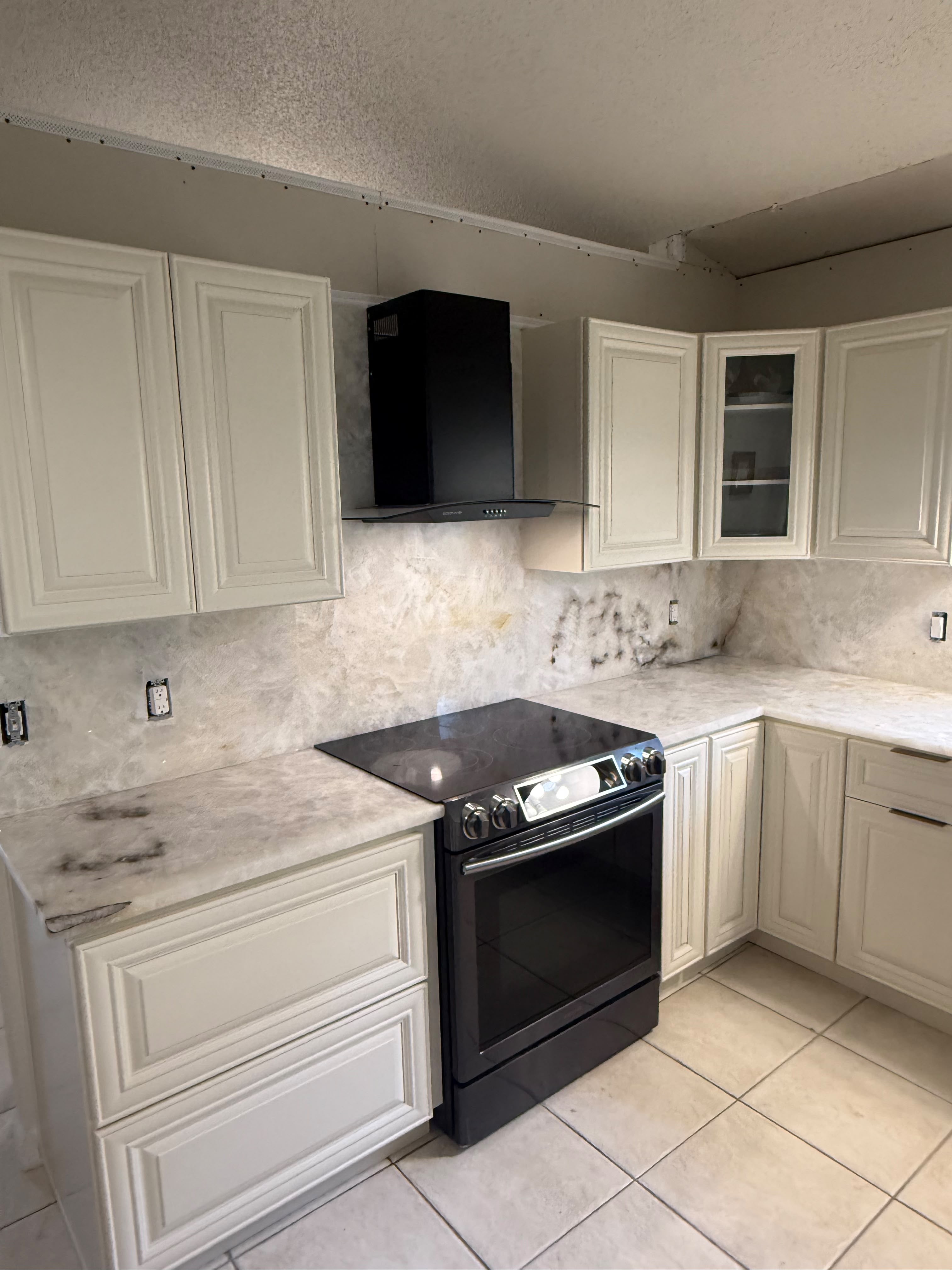
Because granite forms naturally, no two slabs are exactly alike. Mineral deposits, crystals, color changes, veining and movement can all vary from one slab to another.
That natural variation is one of granite's defining characteristics. The slab you select becomes part of the finished design rather than simply being a manufactured reproduction of a pattern.
Why homeowners choose granite
- Natural stone appearance
- Individual slab character
- Strong durability when properly fabricated and installed
- Generally good heat tolerance
- A broad range of naturally occurring colors and patterns
03 — Understanding Quartz
What Is a Quartz Countertop?
The term quartz countertop generally refers to an engineered surface rather than a slab of natural quartz rock. Manufacturers combine mineral quartz with binders, pigments and other components to create countertop slabs.
The exact formulation varies by manufacturer and product, which is why it is better to evaluate the specifications of a particular quartz surface rather than assuming every brand is identical.
Manufacturing also gives designers greater control over the final appearance. Quartz products can range from relatively uniform surfaces to designs intended to resemble marble and other natural stones.
Why homeowners choose quartz
- Broad selection of colors and designs
- Generally consistent appearance
- Nonporous surface
- Typically does not require routine sealing
- Easy day-to-day cleaning
04 — Appearance
Which Looks Better: Granite or Quartz?
Appearance is one of the biggest differences between the two materials, but there is no universal answer to which looks better. They appeal to different design preferences.
Granite
Natural Variation
Granite receives its pattern and color from natural geological processes. One section of a slab may look noticeably different from another, and two slabs of the same named stone can have different movement or coloration.
Quartz
Controlled Design
Quartz manufacturers intentionally design their surfaces. That makes it possible to select from subtle solid looks, fine patterns, dramatic veining and surfaces inspired by natural stone while generally maintaining more consistency.
If you want your countertop to feel unmistakably like a piece of natural stone, granite may appeal to you. If you want greater control over color and pattern consistency, quartz may better match the design you're trying to create.
05 — Durability
Is Granite or Quartz More Durable?
Both materials can provide durable countertop surfaces when they are properly fabricated, installed and cared for.
Granite is hard natural stone, but like other stone materials it can still chip at vulnerable edges or around cutouts if it receives a hard enough impact.
Engineered quartz is also durable, but it is not indestructible. Edges can chip, heavy impacts can cause damage, and excessive heat can affect the resin or other components in the material.
Durable Doesn't Mean Damage-Proof
Regardless of which material you choose, avoid standing on countertops, striking exposed edges with heavy objects or using the countertop as a cutting board. Good everyday habits help protect either surface.
06 — Heat
Granite vs. Quartz Heat Resistance
Granite and heat
Granite itself generally handles heat well, which can be an advantage in a busy kitchen. However, using a trivet is still good practice.
A trivet protects more than the stone itself. It can also help protect sealers and surrounding materials while reducing risks associated with abrupt temperature changes.
Quartz and heat
Engineered quartz requires more caution around high temperatures. The binders and resins used in the material can be affected by excessive heat.
Hot cookware should therefore be placed on a trivet or heat-resistant pad rather than directly on a quartz countertop. Always follow the care recommendations provided by the manufacturer of the specific product you select.
07 — Cleaning & Maintenance
Which Is Easier to Maintain?
Quartz generally has the advantage when the goal is minimizing routine sealing. Because engineered quartz is typically nonporous, it normally does not require the periodic sealing associated with some natural stone countertops.
Granite's porosity varies from stone to stone. Some granite surfaces may benefit from sealing, while others may require it less frequently. Existing treatments, the stone itself and how the countertop is used all affect maintenance needs.
Does granite need to be sealed every year?
Not necessarily. A universal schedule doesn't accurately represent every granite countertop. The need for sealing should be based on the particular stone and its condition rather than automatically applying the same timetable to every installation.
Can quartz stain?
Quartz is generally resistant to staining because of its nonporous construction, but calling any countertop completely stain-proof would be misleading. Spills should still be cleaned promptly, and the manufacturer's instructions should be followed when choosing cleaners.
08 — Kitchens
Granite vs. Quartz for Kitchen Countertops
Kitchens are where the differences between granite and quartz tend to matter most because countertops regularly encounter food, spills, cookware and daily activity.
Granite can be particularly appealing to homeowners who want authentic natural stone and value heat tolerance. Quartz can appeal to homeowners who want easier routine maintenance and greater control over the color or pattern of the finished kitchen.
Consider Granite If
You Prefer Natural Stone
Granite may fit your kitchen if natural variation, unique slabs and the character of quarried stone are major parts of your design.
Consider Quartz If
You Prefer Consistency
Quartz may fit your kitchen if you want a more predictable pattern, a particular manufactured design or a surface that generally does not require sealing.
09 — Bathrooms
Granite vs. Quartz for Bathroom Countertops
Both materials can also work well for bathroom vanities. The decision often comes down to appearance and maintenance rather than the heat considerations that can play a larger role in kitchens.
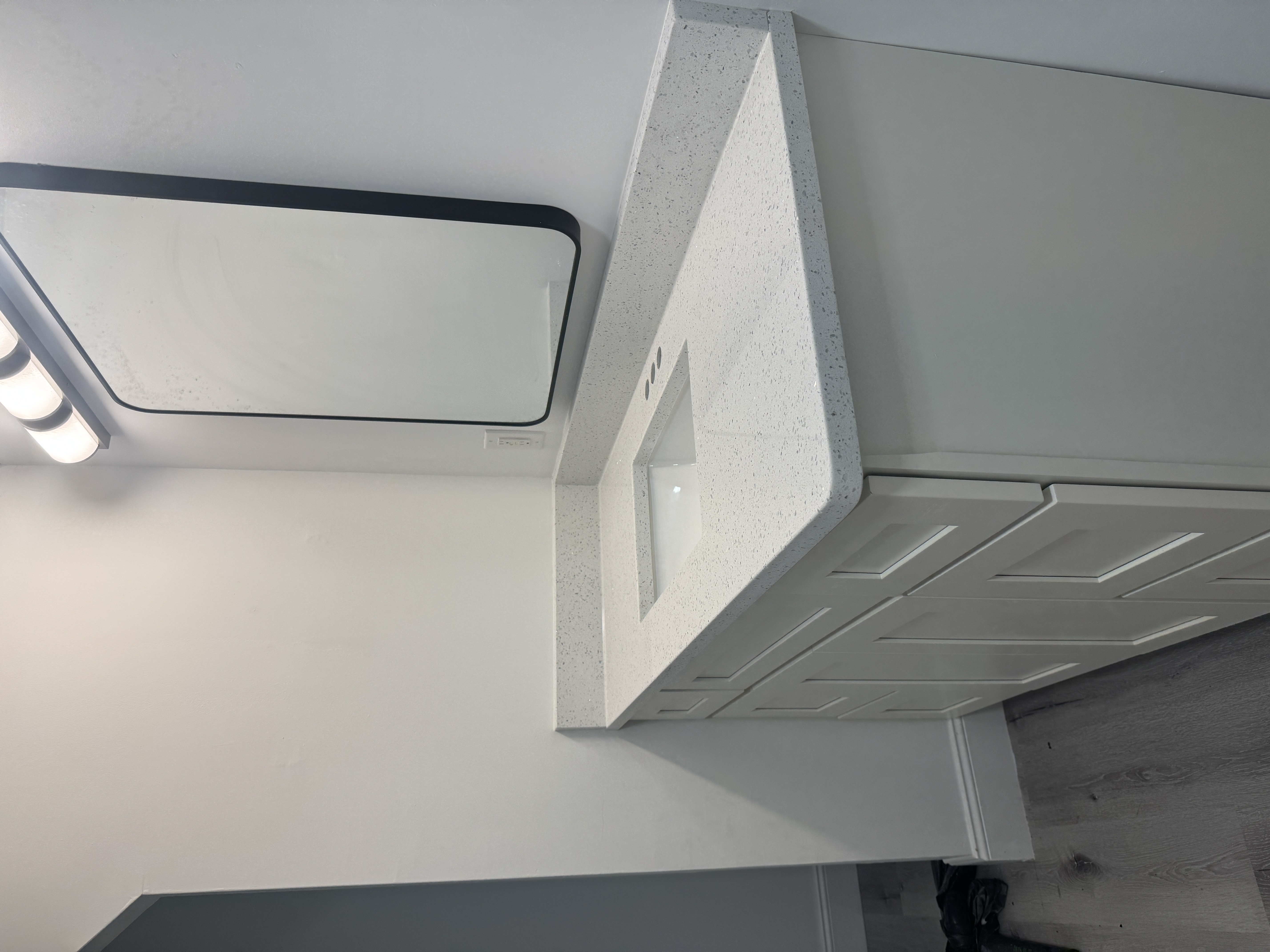
Quartz's nonporous construction and straightforward maintenance can make it attractive for bathrooms. Granite can provide the natural stone appearance and variation that homeowners may want for a distinctive vanity.
Whichever material you select, proper fabrication around sinks and professional installation remain important to the finished result.
10 — Outdoor Applications
What About Outdoor Countertops?
Granite can be appropriate for many outdoor countertop applications when the particular stone, finish and installation are suitable for the environment.
Engineered quartz requires more caution outdoors. UV exposure and environmental conditions can affect the resin, pigments or overall appearance of some quartz products.
If you're considering quartz for an outdoor project, the specific manufacturer should explicitly approve that product for the intended outdoor application.
11 — Fabrication
What About Seams?
Large countertop layouts may require seams regardless of whether you choose granite or quartz. Slab dimensions, cabinet layout, access to the home, sink and cooktop cutouts, pattern movement and fabrication requirements can all influence seam placement.
With heavily patterned materials, the way adjacent pieces interact visually can be especially important. Natural stone also has inherent variation that must be considered when laying out a project.
Good planning and fabrication are therefore just as important as the material itself.
12 — Project Cost
Is Granite or Quartz More Expensive?
There isn't a reliable rule that one material is always less expensive than the other.
Granite and quartz are both available across different product ranges, and the total cost of a countertop project depends on more than the material category.
Factors can include:
- The specific slab or quartz design selected
- Total countertop area
- Number and type of cutouts
- Edge details
- Backsplash requirements
- Waterfall panels
- Layout complexity
- Fabrication requirements
- Installation conditions
Comparing actual materials for your particular project provides more useful information than choosing granite or quartz based on a broad price assumption.