01 — Quick Comparison
Quartz vs. Quartzite at a Glance
The easiest way to understand the difference is to start with how each countertop is made.
Quartz is manufactured. Quartzite is quarried from naturally formed stone. That basic difference affects almost every other characteristic of the countertop.
| Feature | Quartz | Quartzite |
|---|---|---|
| Material Type | Engineered countertop surface | Natural metamorphic stone |
| Appearance | Manufactured in many colors and patterns with generally greater consistency | Naturally occurring colors, mineral patterns and movement |
| Slab Variation | Generally more predictable within a particular product | Each natural slab can vary |
| Porosity | Generally nonporous | Natural stone with absorption characteristics that vary by slab and stone |
| Sealing | Generally does not require routine sealing | Many quartzite countertops can benefit from appropriate sealing |
| Heat | Requires caution because high heat can affect resins and binders | Natural quartzite generally tolerates heat well |
| Design Control | Broad manufactured selection | Design is determined by the natural slab |
| Outdoor Use | Depends on specific manufacturer approval | May be appropriate for outdoor applications depending on the stone and installation |
02 — Engineered Quartz
What Is a Quartz Countertop?
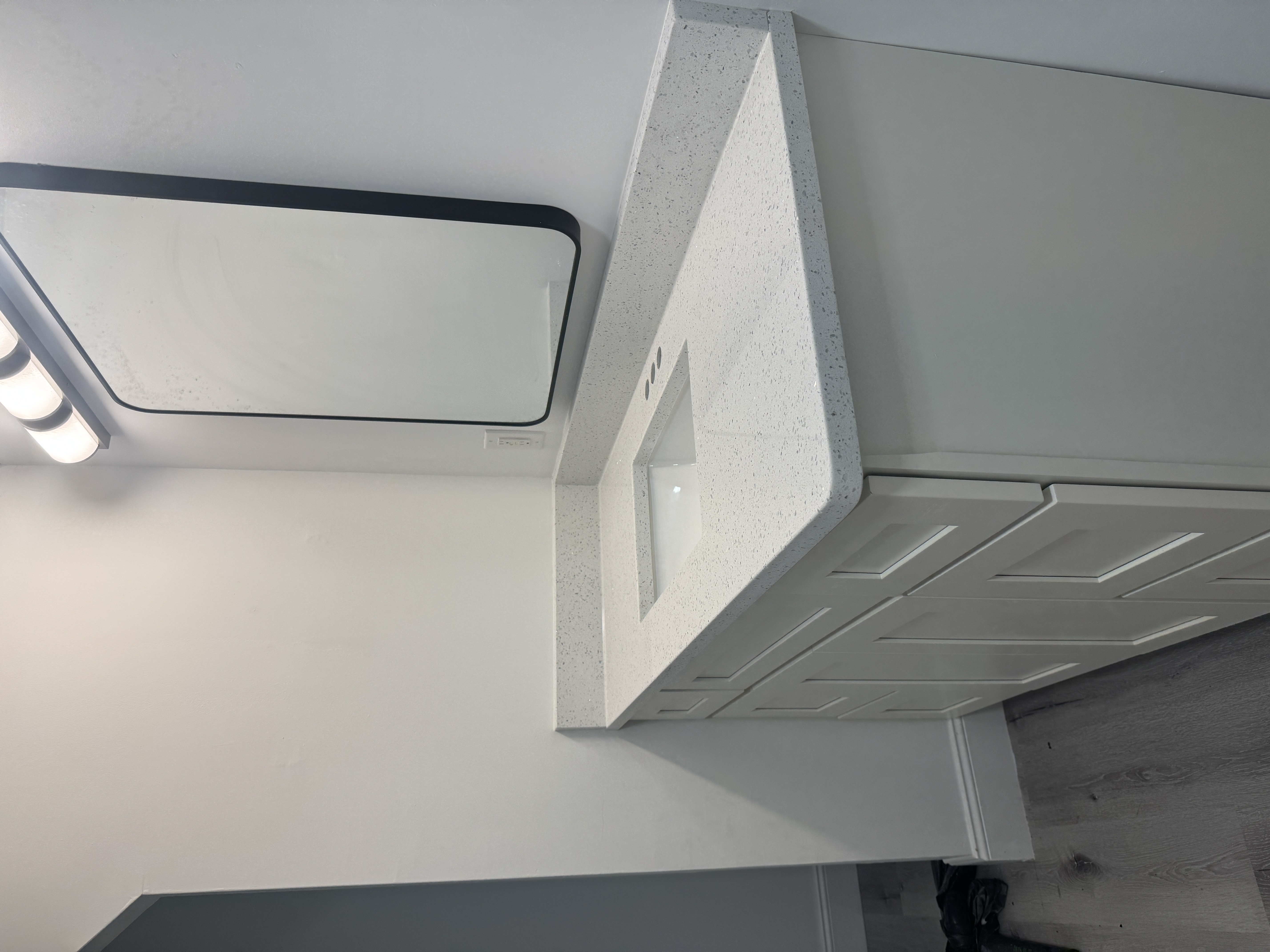
Quartz countertops are engineered surfaces. Manufacturers combine mineral quartz with binders, pigments and other components to produce slabs designed for countertop fabrication.
Because the material is manufactured, designers can create a wide range of appearances. Some quartz surfaces are relatively uniform, while others feature dramatic veining designed to create the visual movement associated with natural stone.
The exact formulation and performance characteristics can vary by manufacturer and product, so care recommendations for the specific quartz selected should always be followed.
Common reasons homeowners choose quartz
- Broad range of colors and patterns
- Greater design consistency
- Generally nonporous construction
- No routine sealing in most applications
- Straightforward everyday cleaning
03 — Natural Quartzite
What Is a Quartzite Countertop?
Quartzite is natural metamorphic rock. It forms when quartz-rich sandstone is subjected to geological heat and pressure, changing the structure of the original rock.
The resulting natural stone can be quarried into slabs and fabricated for countertop installations.
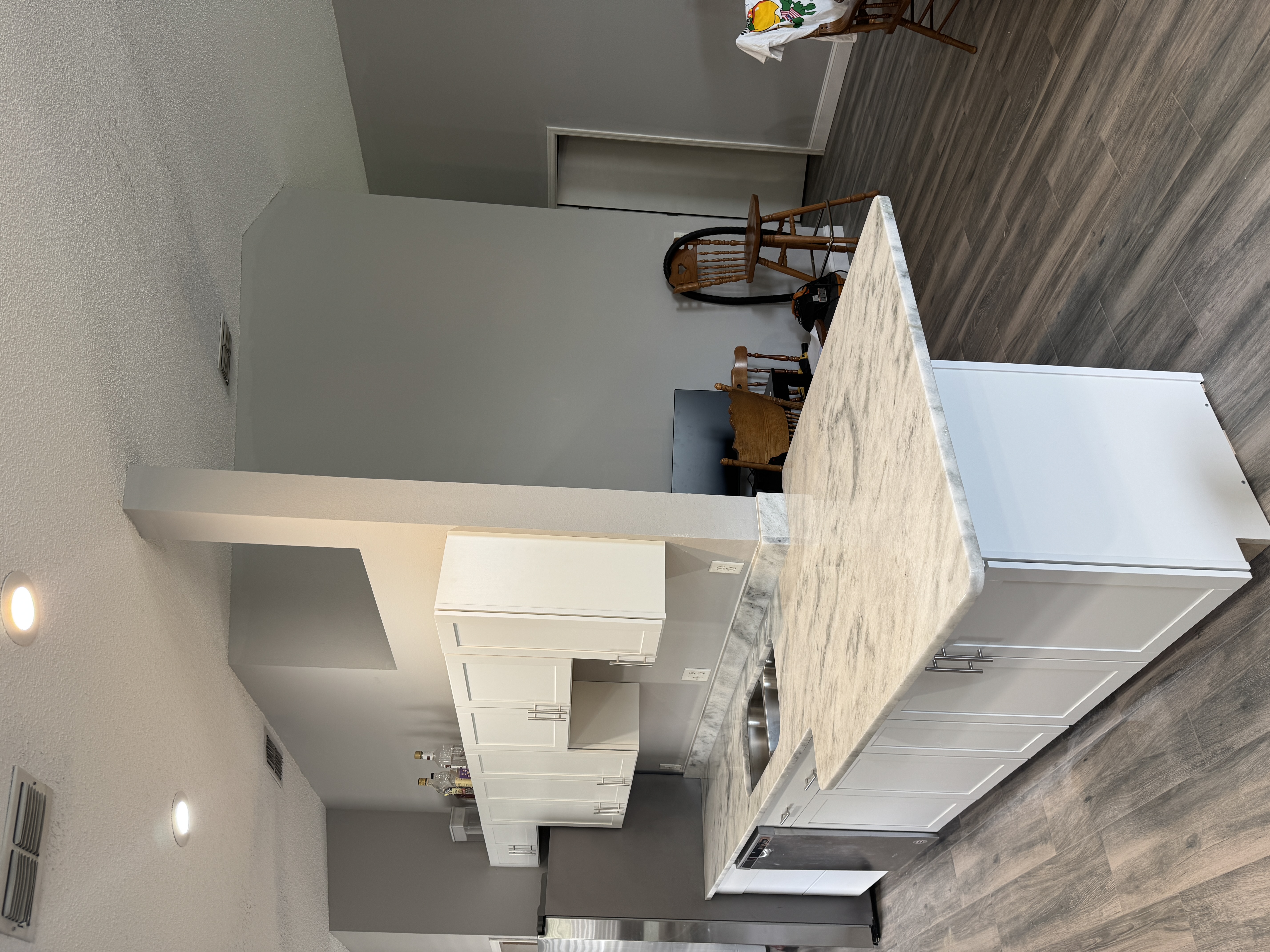
Because quartzite forms naturally, slabs can contain variations in color, mineral deposits, movement and veining. These characteristics are part of the appeal for homeowners who want an individual natural-stone surface.
Common reasons homeowners choose quartzite
- Genuine natural stone
- Unique slab-to-slab variation
- Dramatic natural patterns
- Strong natural-stone durability
- Generally good heat resistance
Quartzite Isn't Natural Quartz
Quartzite is a natural rock. Engineered quartz countertops use quartz minerals as part of a manufactured surface. Similar names do not mean the countertop materials are interchangeable.
04 — Appearance
Quartz vs. Quartzite Appearance
Both materials can produce dramatic countertops, but their appearance comes from very different processes.
Quartz
Designed Appearance
Quartz is manufactured, allowing producers to intentionally create colors, patterns and veining. That provides homeowners with a broad selection and generally greater consistency.
Quartzite
Natural Appearance
Quartzite receives its color and movement from natural geological processes. Individual slabs may contain different patterns, veins, mineral features and tonal changes.
Quartz may appeal to you if you're trying to achieve a very particular color or pattern throughout a project.
Quartzite may appeal to you if selecting an individual natural slab and incorporating its unique characteristics into the kitchen is part of what you enjoy about stone countertops.
05 — Durability
Which Is More Durable?
Quartz and quartzite can both provide durable countertop surfaces, but durability should not be reduced to a single claim about one material being indestructible.
Quartzite is a hard natural stone. Engineered quartz is also designed to withstand normal residential countertop use.
Either material can still be damaged by heavy impacts, especially around exposed edges and cutouts. Fabrication quality, support, installation and everyday care all contribute to long-term performance.
Hardness Isn't the Whole Story
A countertop's real-world performance depends on more than the hardness of the material. Edge design, unsupported areas, cutouts, seams, fabrication and installation also matter.
06 — Heat Resistance
Quartz vs. Quartzite Around Heat
Quartz
Engineered quartz contains binders and resins that can be affected by excessive heat. Hot pans and cookware should not be placed directly on the countertop.
Using trivets or heat-resistant pads is the appropriate everyday precaution.
Quartzite
Natural quartzite generally tolerates heat well. Even so, using a trivet remains good practice because it helps protect the entire countertop system, including any treatments and surrounding materials.
07 — Maintenance
Does Quartz or Quartzite Need Sealing?
Quartz
Engineered quartz is generally nonporous and normally does not require routine sealing.
Day-to-day maintenance is typically straightforward, although you should still use cleaning products appropriate for the specific quartz manufacturer's recommendations.
Quartzite
Quartzite is natural stone, and absorption characteristics can vary. Many quartzite countertops can benefit from sealing to help reduce liquid absorption.
There is no reason to assume every natural-stone countertop needs exactly the same sealing schedule. The particular stone, finish, existing treatment and how the surface is used should be considered.
08 — Stain Resistance
Which Is More Resistant to Staining?
Engineered quartz's generally nonporous construction gives it an advantage when minimizing liquid absorption is a priority.
That does not mean quartz should be described as completely stain-proof. Spills should still be cleaned promptly and unsuitable chemicals can affect a surface.
Quartzite is natural stone, and its absorption characteristics can vary. Appropriate sealing and prompt cleanup of spills can help protect the surface.
09 — Project Cost
Is Quartz or Quartzite More Expensive?
It is better to compare the actual materials being considered than assume every quartz or quartzite project falls into one fixed price category.
Pricing can vary considerably depending on the specific product or slab as well as the complexity of the project.
Factors that can affect total countertop cost include:
- Specific slab or quartz product
- Countertop square footage
- Slab yield and layout
- Edge profile
- Sink and cooktop cutouts
- Waterfall panels
- Backsplash
- Fabrication complexity
- Installation conditions
A project estimate based on your actual layout and material selection is much more useful than relying on a generic assumption about which material should cost more.
10 — Kitchen Countertops
Quartz vs. Quartzite for Kitchens
Both materials can work well in kitchens, but your habits may make certain characteristics more important.
Quartz provides a nonporous surface and generally lower routine maintenance. That can be attractive in a heavily used kitchen.
Quartzite offers genuine natural-stone character and generally good heat tolerance. That can be attractive to homeowners who prioritize natural materials and individual slab movement.
11 — Bathroom Countertops
Quartz vs. Quartzite for Bathrooms
Quartz and quartzite can also both be used for bathroom vanity countertops.
Quartz's generally nonporous construction and easy maintenance can make it appealing for bathrooms. Quartzite can create a distinctive natural-stone vanity with variation that cannot be exactly duplicated by another slab.
Design preference often becomes especially important in bathrooms because the heat considerations associated with cookware are usually less significant.
12 — Outdoor Applications
Quartz vs. Quartzite Outdoors
Quartzite may be suitable for many outdoor applications when the particular stone and installation are appropriate for the environment.
Engineered quartz requires additional caution outdoors because UV exposure can affect some resins and pigments.
Quartz should only be considered for an outdoor application when the manufacturer specifically approves that product for the intended use and environment.